
Kitchen Water and Mold Damage Cleanup in Stockton
Containment, cabinet removal, and a floor-mat drying system helped CFPR address water and mold damage while working to preserve materials.
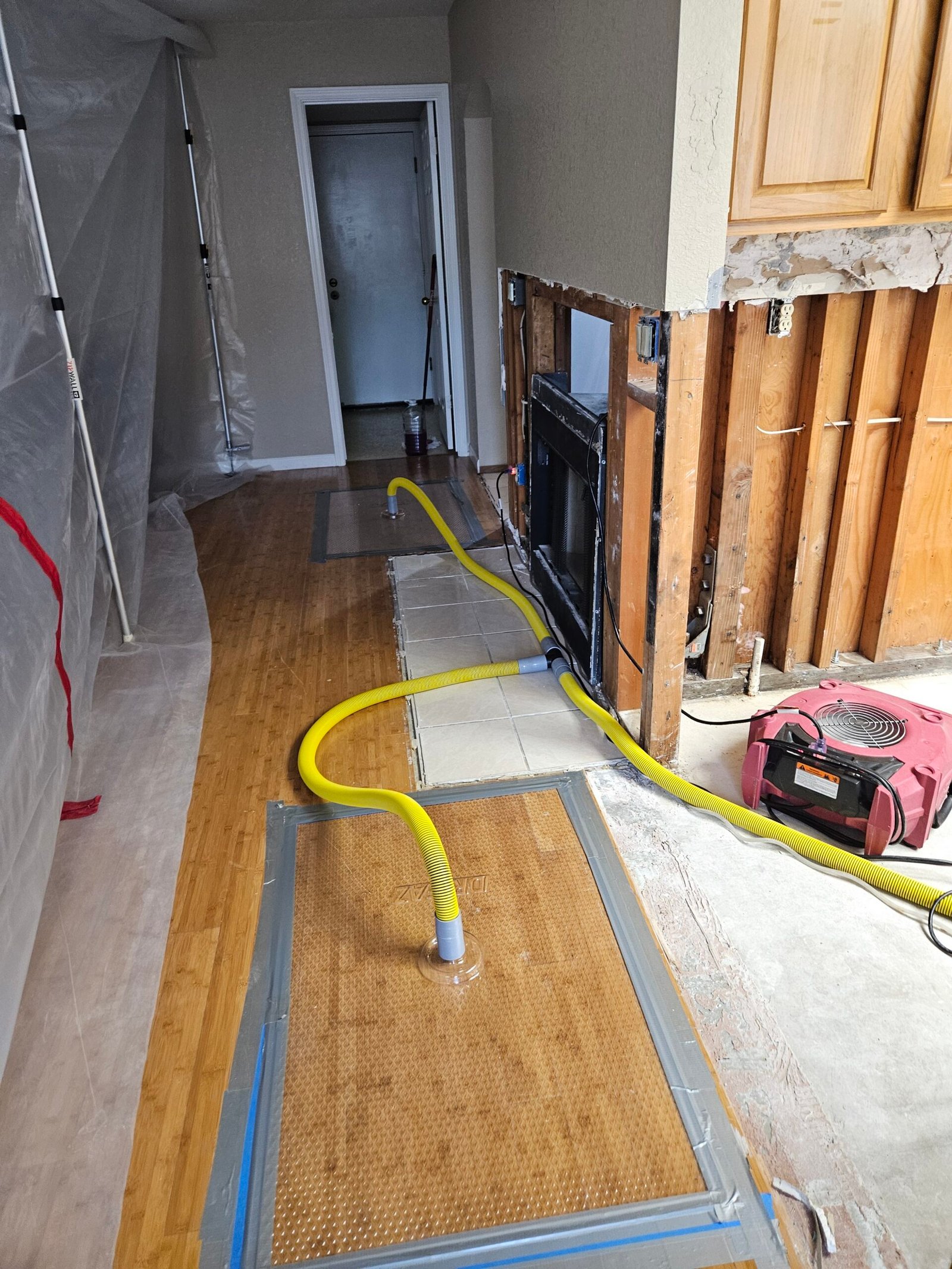
This Stockton project called for decisions about what to remove and what to keep. CF Property Restoration addressed water and mold damage in the kitchen, preserved cabinet faces for the rebuild, and installed a floor-mat drying system to work on the hardwood flooring.
Containing the work area before removal
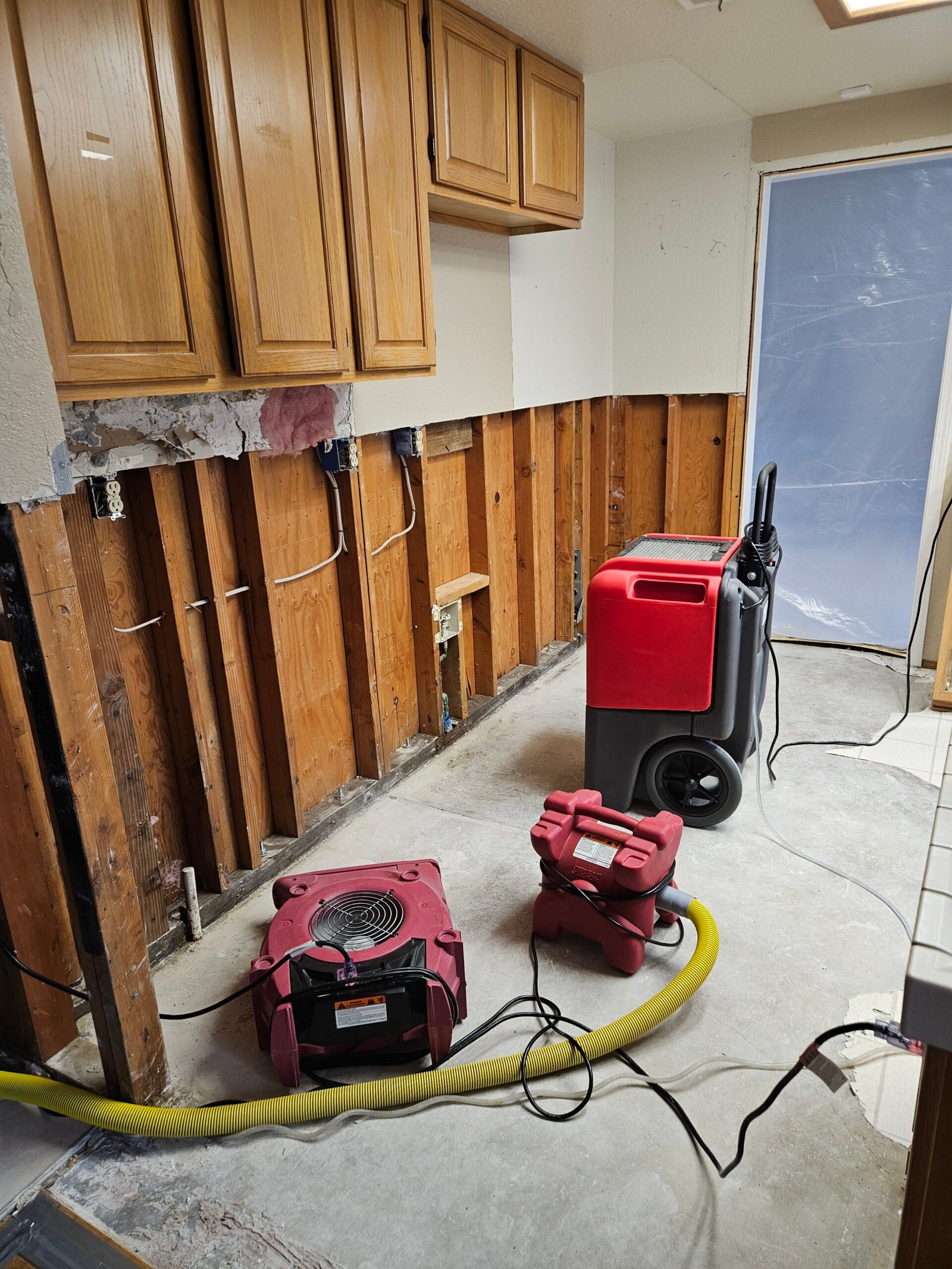
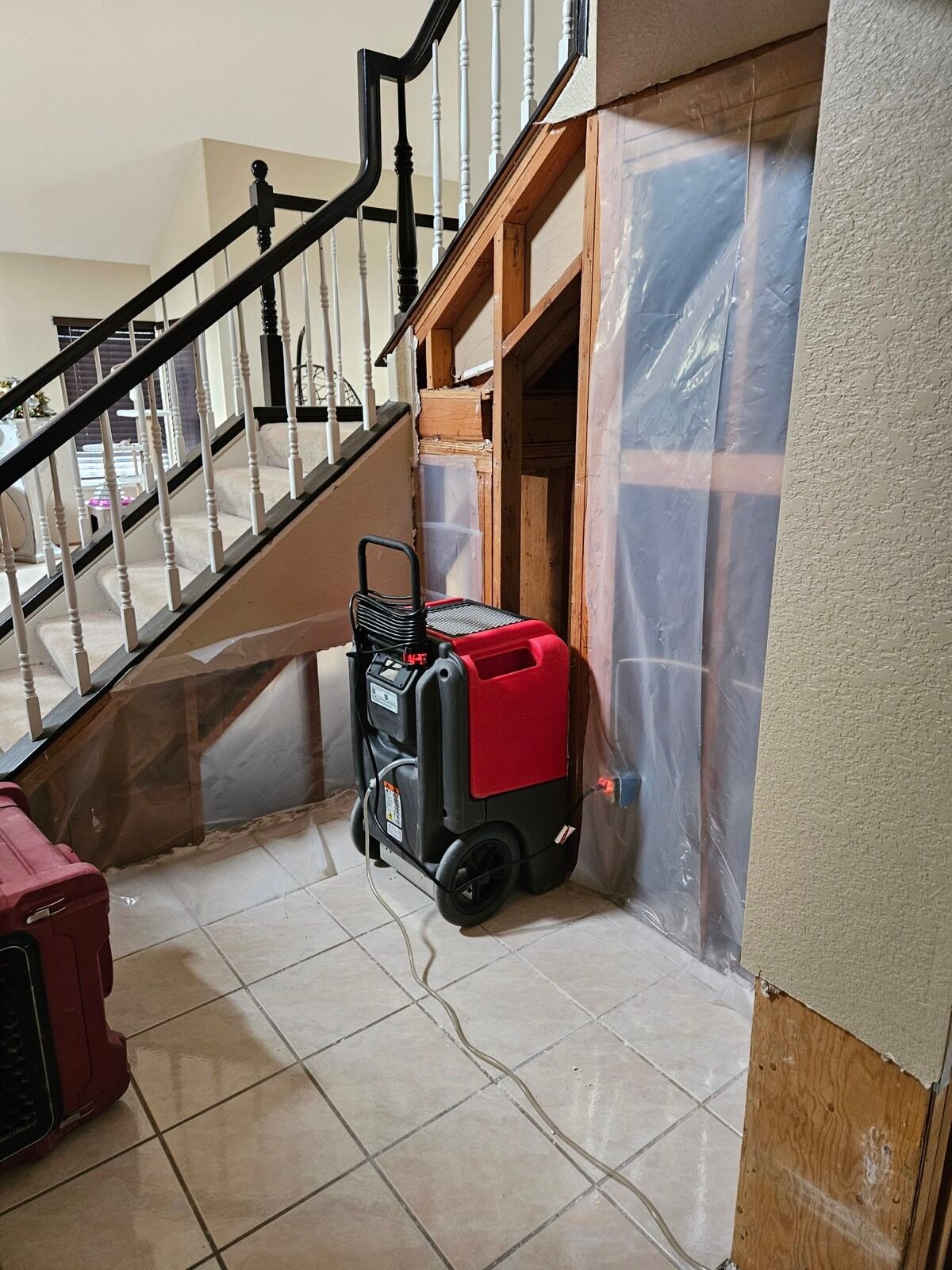
CFPR set up containment before making cuts in affected materials. The team also placed dehumidifiers and an air-filtration device to manage moisture and help limit cross-contamination during the work.
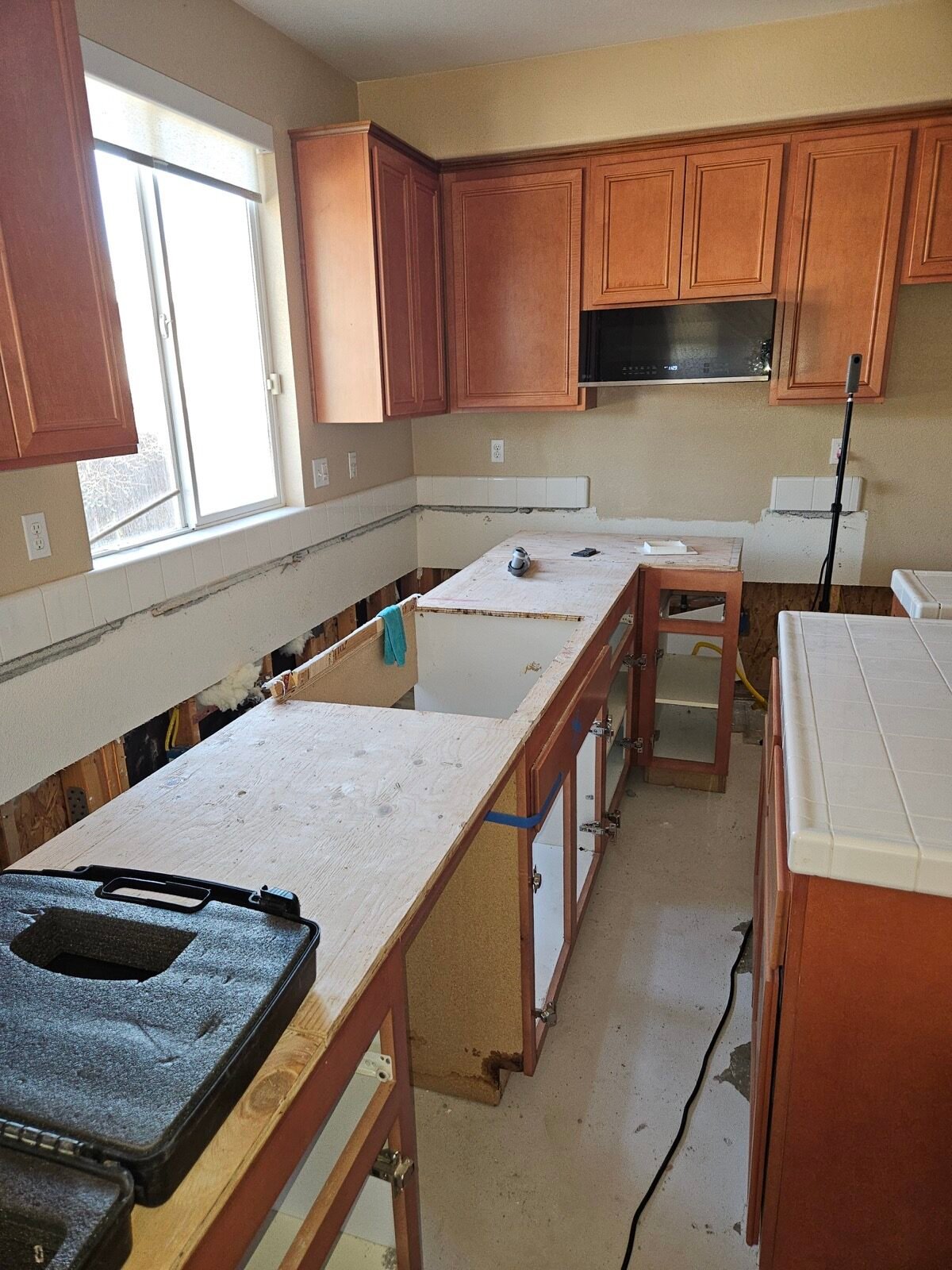
Affected cabinetry and the countertop were removed and disposed of. Cabinet faces were kept for use during the rebuild, allowing the team to separate components that needed removal from those that could be retained.
Working to preserve the hardwood floor
A floor-mat drying system was installed on the hardwood. The project photos show drying mats connected by hoses beside the kitchen, along with equipment near the opened walls.
The system was used with the goal of saving the flooring. That is a different decision from automatically removing every material in the affected area; the approach here included targeted drying alongside selective removal.
Keeping the scope clear
The homeowners had already filed an insurance claim. CFPR discussed approvals before moving ahead with major expenses, making the cost of the next steps part of the conversation.
The reported project timeline was seven days. The documented scope included containment, material removal, drying equipment, and preserving cabinet faces for later rebuilding.
Selective removal in a water-damaged kitchen
The Stockton kitchen required more than one decision about materials. Cabinetry and the countertop were removed, cabinet faces were retained for rebuilding, and the hardwood received targeted drying. Those were three different parts of the same project, rather than a single decision to remove or keep everything.
For homeowners, this distinction helps make the scope easier to understand. A cabinet face retained for the rebuild is not the same as an entire cabinet remaining in place. Similarly, installing a floor-drying system describes the treatment being attempted; it is not a guarantee that every affected board can be saved.
Can hardwood flooring be dried without replacing it?
In this project, CFPR installed a floor-mat drying system with the goal of preserving the hardwood. The photographs show where the mats were placed and how the hoses connected across the affected floor. The project record documents that drying approach, but does not establish the final condition of every floorboard.
If you are facing a similar decision, ask which flooring areas are affected, what the proposed drying work includes, and how the team will decide whether further removal is needed. That conversation is more useful than assuming a floor must always be replaced—or can always be saved.
Water damage cleanup in Stockton, CA
This Stockton job brought water damage restoration and mold remediation together in a kitchen where the owners also wanted to preserve usable materials. CFPR’s service pages explain those two areas of work, while this project shows the specific containment, removal, and drying setup used at one property.
If you notice wet flooring, changes around the base of cabinetry, or discoloration after water damage at your Stockton property, contact CFPR to discuss an assessment. Mention which rooms are affected and whether you have already opened an insurance claim so those details can be part of the scope discussion. Call (209) 934-2377.
Photos from this project
More CFPR projects
Emergency water cleanup in Santa Nella
A weekend response included structural drying, saving real-wood cabinets, and moving belongings out and back during the project.
View project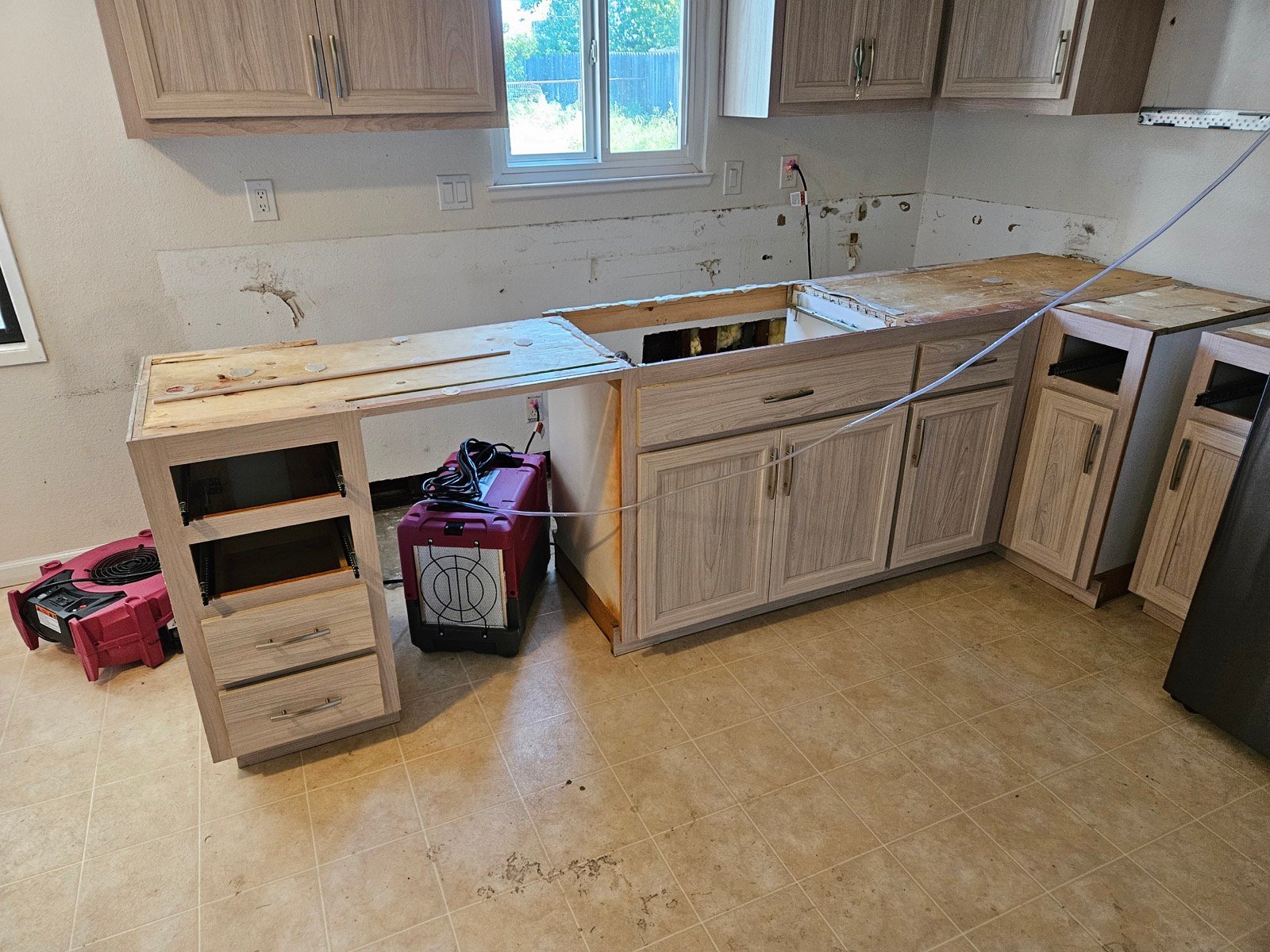
Drying behind kitchen cabinets in Merced
CFPR set up containment, detached lower cabinetry, removed affected materials, and dried the exposed wall framing.
View projectNeed help with damage at your property?
Tell us what you’re seeing. CFPR can assess the affected area and explain the next steps.