Wet Carpet After a Leak: A Merced Homeowner’s Guide
What to ask when carpet is wet, why the pad and wall matter, and how to understand a drying proposal.
CF Property Restoration · October 16, 2026
Wet carpet is often the first thing a homeowner notices after a leak. It is also only one part of the affected area. The carpet pad, adjoining wall, and access beneath the carpet can all become part of the restoration discussion. Here is how to approach that conversation at a Merced property.
Describe the flooring and the nearby wall together
Tell the restoration team where the carpet feels wet and whether you have noticed discoloration at the wall or baseboard. Explain whether the affected area has expanded since you discovered it. Do not move through an unsafe room simply to measure the damage.
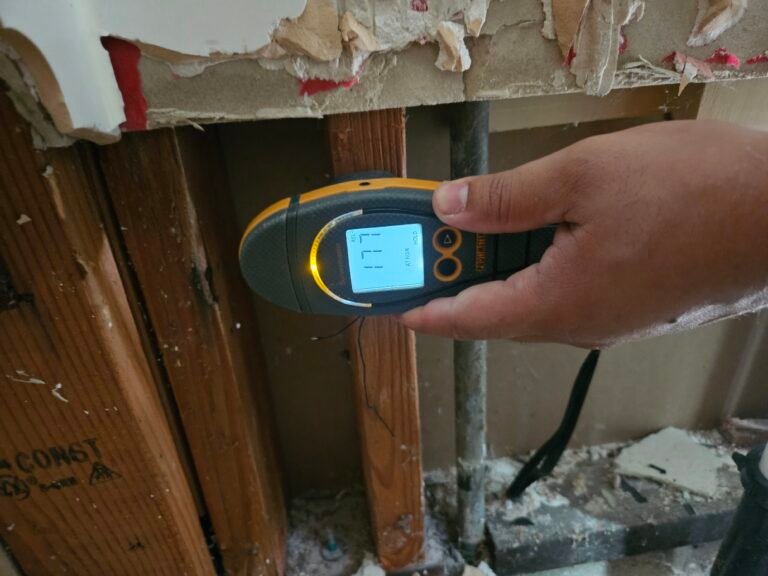
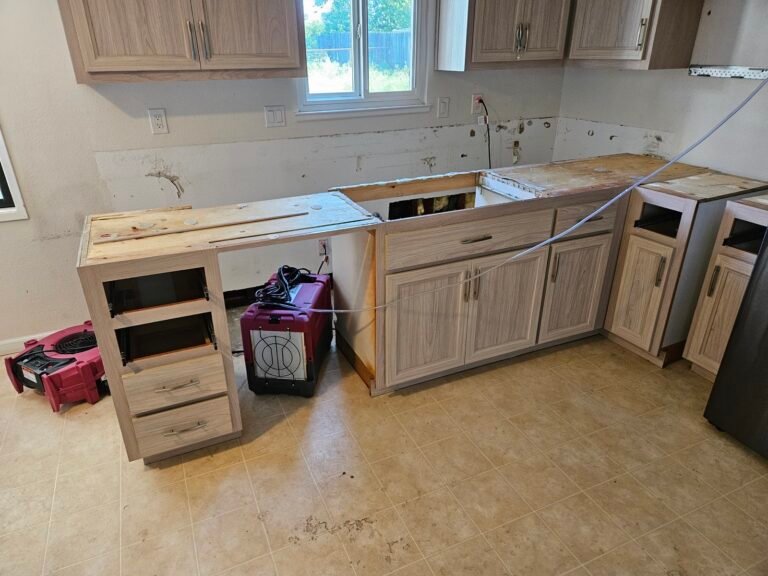
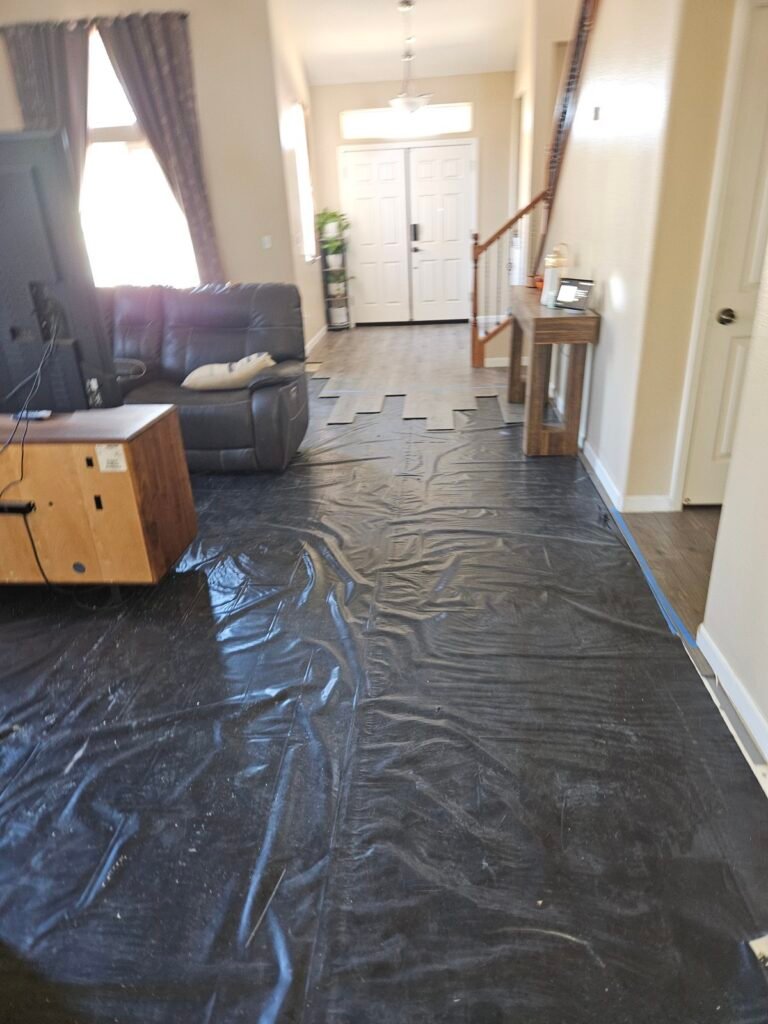
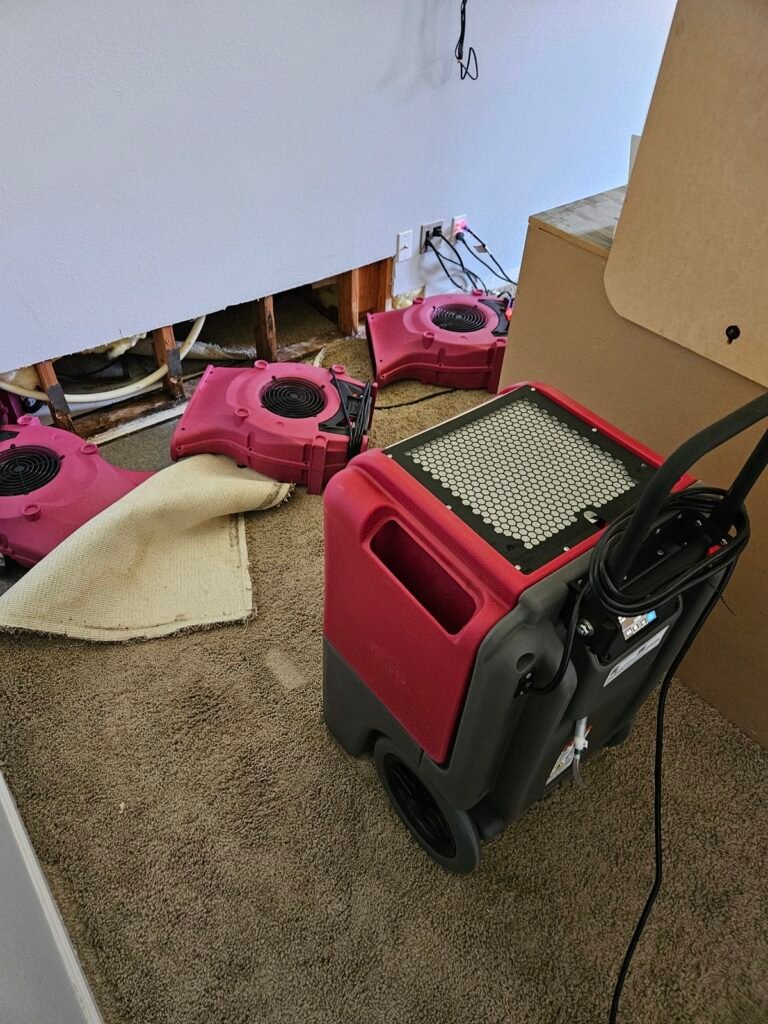
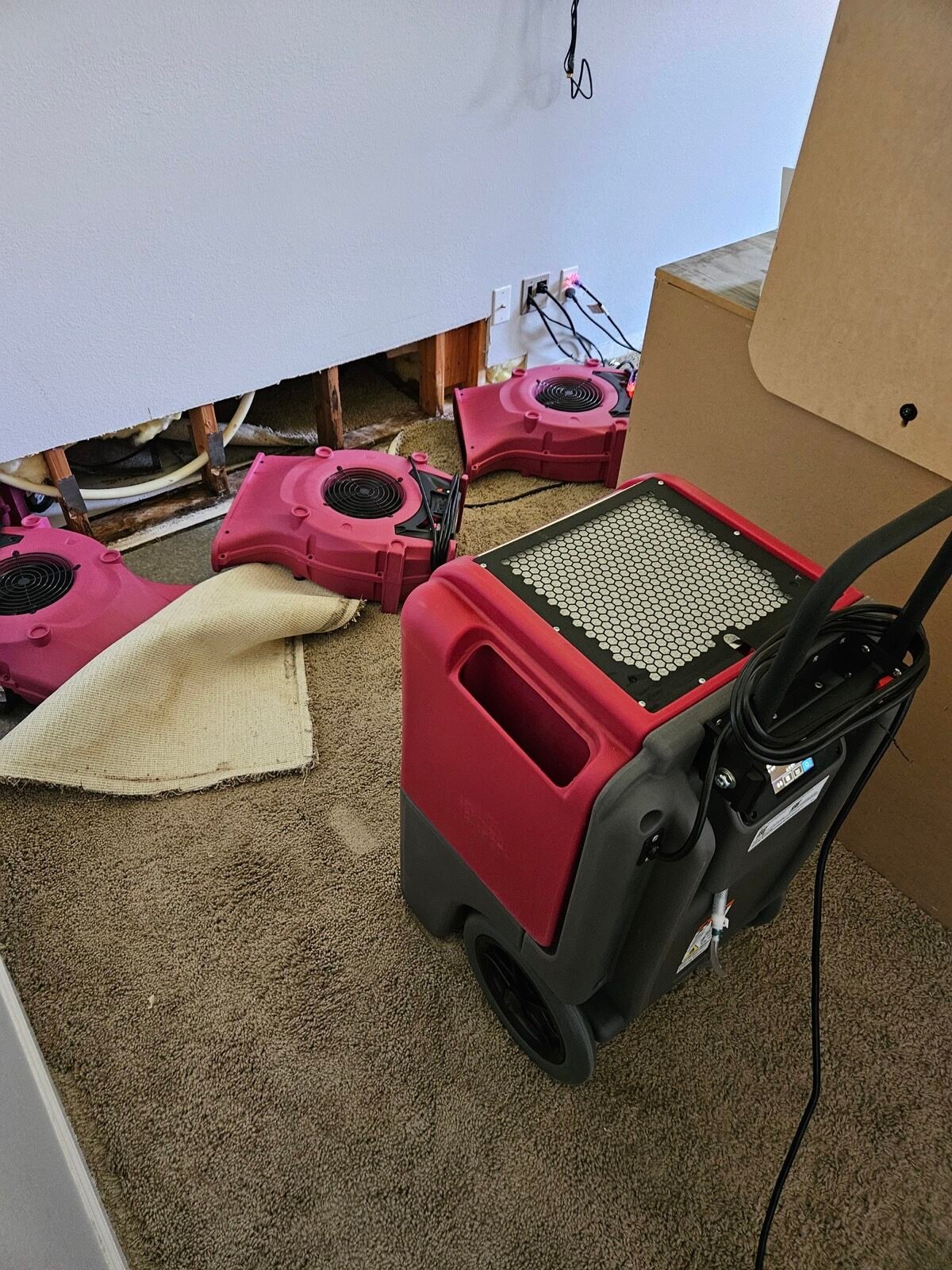
In CFPR’s wet-carpet project in Merced, the homeowner reported wet carpet and discolored drywall. The team removed affected materials, opened the lower wall, lifted the carpet, and used equipment to dry the studs, carpet, and pad.
Why a surface check does not tell the whole story
The project photos show carpet pulled back beside exposed studs. That access was part of the job, not just a way to position equipment. The team addressed the flooring and concealed wall area together.
For a different home, the assessment needs to establish which materials are affected and what access is necessary. A room that looks tidier after visible water is gone may still need a clear plan for the materials that were wet. Ask how the team will determine the scope rather than relying on appearance alone.
Can the carpet and pad be kept?
The answer needs to be specific to your property. CFPR’s Merced project included drying the carpet and pad, but that does not establish that all wet carpet should be retained. The water source, material condition, and assessment are relevant to the decision.
Ask the contractor to separate the proposal into items to remove and items to dry or evaluate. If a material may need removal later, ask how that decision will be discussed with you. Clear categories make an estimate easier to understand than a single line saying “water cleanup.”
What a drying timeline does—and does not—mean
The Merced project had a reported three-day timeline. That is a record of one scope of work, not a standard time for every carpet loss. Ask what the proposed schedule includes and whether repairs to the opened wall are part of the same agreement.
Also discuss access to the room while equipment is in place. Identify the household’s practical needs, such as a walkway or access to an adjoining room, and let the team explain how those needs fit with the work area.
Help with wet carpet in Merced and nearby cities
Start with CFPR’s water damage restoration in Merced page or the Atwater service area if the property is there. The local pages connect residents to the appropriate services without assuming every home needs the same treatment.
Call (209) 934-2377 with the property location, when the water was discovered, and the visible changes. Those details are a useful starting point for discussing an assessment.
Photo: CFPR’s Merced carpet project addressed both the flooring and the lower wall.
Need help with damage at your property?
Tell us what you’re seeing. CFPR can assess the affected area and explain the next steps.