Why Mold Keeps Coming Back: A Merced County Homeowner’s Guide
Learn why recurring mold needs a moisture investigation, what to document, and how to discuss a lasting cleanup plan.
CF Property Restoration · October 26, 2026
A spot is cleaned, the wall is repainted, and a few weeks later the same area looks wrong again. Recurring mold is frustrating because the surface work can look finished while the underlying problem remains unresolved. Whether the property is in Los Banos, Gustine, or elsewhere in Merced County, the useful question is what keeps supplying moisture to that particular area.
Start with the pattern you can observe
Write down where the problem returns and what happens around the same time. Is it near a shower, beneath a sink, at an exterior wall, or beside a previous leak? Does the discoloration follow rain, appliance use, or periods when a bathroom stays damp? These observations help organize an assessment without requiring you to diagnose hidden conditions.
Photograph the area from the same safe position over time. Keep dates of earlier plumbing repairs, cleanup, or painting. A contractor can use that history to distinguish the visible complaint from the questions that still need investigation. Avoid opening a wall or pulling up flooring just to get a better picture.
Cleaning and moisture correction are separate tasks
The EPA explains that cleaning mold without fixing the water problem is likely to lead to recurrence. It also advises against painting or caulking over moldy surfaces before cleanup and drying.
Ask for a plan that identifies both responsibilities. Who will investigate and repair a plumbing or building issue? Who will handle affected materials? What must be completed before finishes are replaced? A new coat of paint may hide a stain, but it does not establish that the moisture source has been corrected.
What a local bathroom project can teach
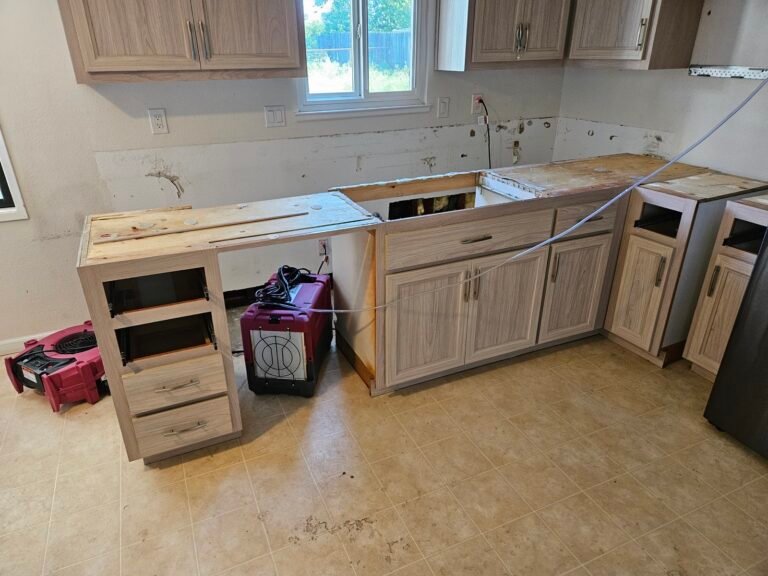
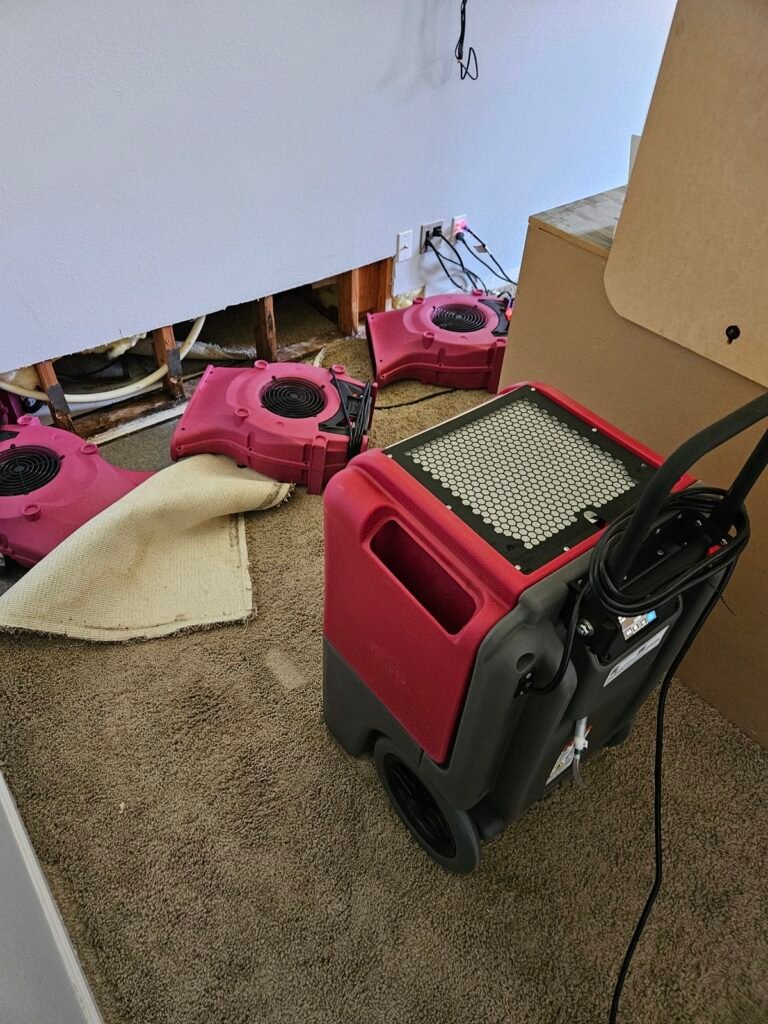
CFPR’s Los Banos bathroom water-damage and mold-remediation project provides a real example of restoration work involving moisture and affected bathroom materials. The project photos are useful for understanding why work can extend beyond the small area a homeowner first notices.
They should not be used to diagnose your own bathroom or assume that the same materials must be removed. Ask the assessor to explain the condition of your property and the reason for each proposed step. For more on the initial warning signs, read our hidden bathroom moisture guide.
When the concern may be concealed
A recurring odor or stain can justify further investigation, but neither identifies the extent of mold by itself. Explain what you have noticed and let the professional discuss appropriate inspection and access. The goal is to find the relevant conditions rather than remove material based only on a guess.
EPA cautions that investigating hidden mold can disturb it. It recommends experienced help when hidden mold is suspected. If the work requires opening a cavity, ask how the area will be managed and how nearby belongings and occupied spaces will be protected.
Build a scope you can understand
A useful proposal names the affected rooms, the materials being evaluated, any proposed removal, and the cleanup work. It should also explain what remains uncertain until access is available. Ask how unexpected findings will be documented and discussed before the scope expands.
Clarify whether repair of the moisture source and reconstruction are included or handled separately. If you are coordinating a plumber and a restoration contractor, share their contact details and agree on the order of work. Keep the discussion focused on the building conditions and the proposed remedy; a photograph alone cannot answer health questions or identify mold species.
Questions homeowners often ask
Does black discoloration prove that mold is especially dangerous? Color alone does not establish the species, extent, or health implications. Have the building problem assessed, and direct individual health concerns to a qualified health professional.
Will every stained material need replacement? Not necessarily. Ask which materials can be cleaned and which require removal, and why. The condition and type of material matter; a proposal should explain the decision for your property.
How will I know the problem has been addressed? Ask how the contractor will verify completion, document the moisture correction, and explain any follow-up needs. Keep a record of what was repaired and report renewed dampness promptly instead of waiting for the same surface damage to return.
Local mold-remediation information
CFPR has information for mold remediation in Los Banos and mold remediation in Gustine. You can also use the Merced County service-area hub to find your city.
Call (209) 934-2377 with the property location and a brief history of the recurring problem. Mention previous leaks or repairs so the conversation begins with more than the latest visible spot.
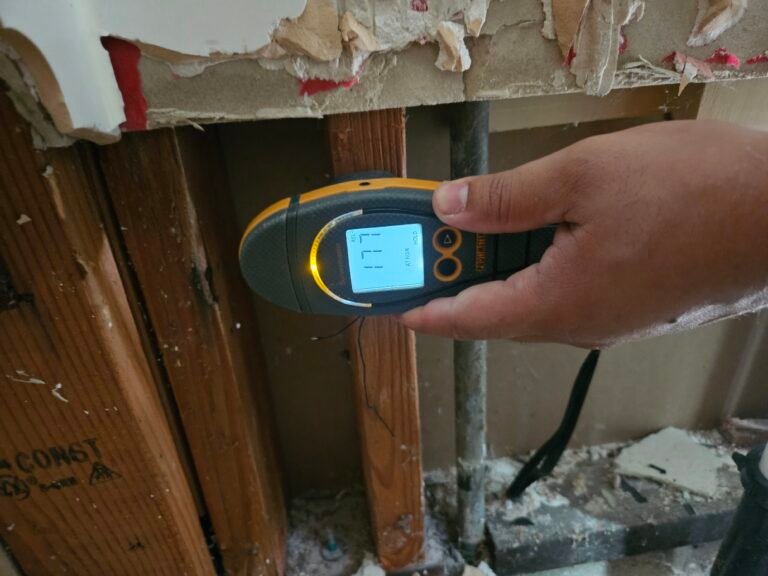
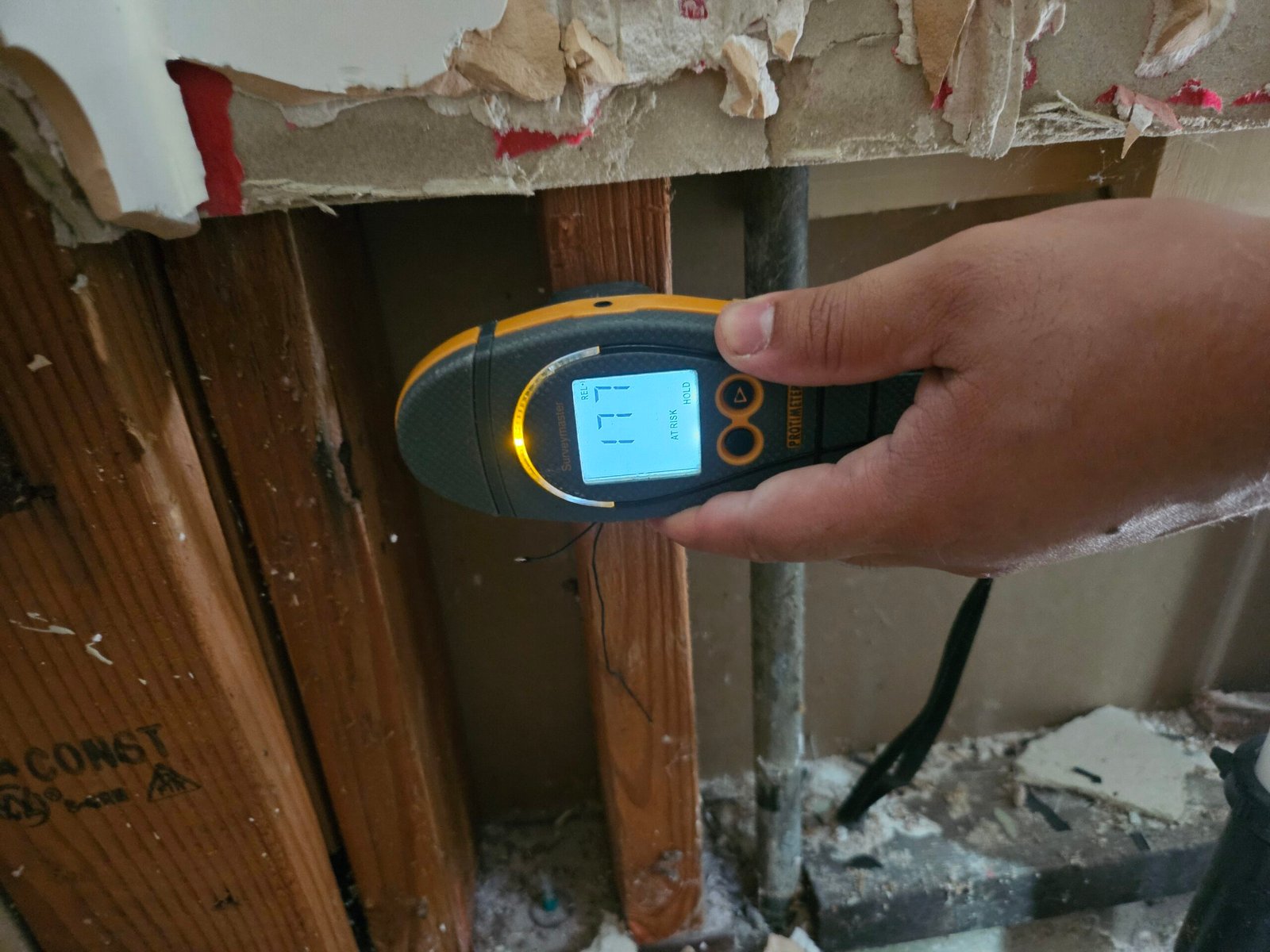
Photo: A moisture check on exposed framing during CFPR’s Los Banos bathroom project.
Talk with CF Property Restoration
Tell us where the property is and what happened so we can discuss the next step.