Can Water-Damaged Kitchen Cabinets Be Saved?
Compare three CFPR projects to understand cabinet access, selective removal, and the questions to ask before replacing a kitchen.
CF Property Restoration · October 16, 2026
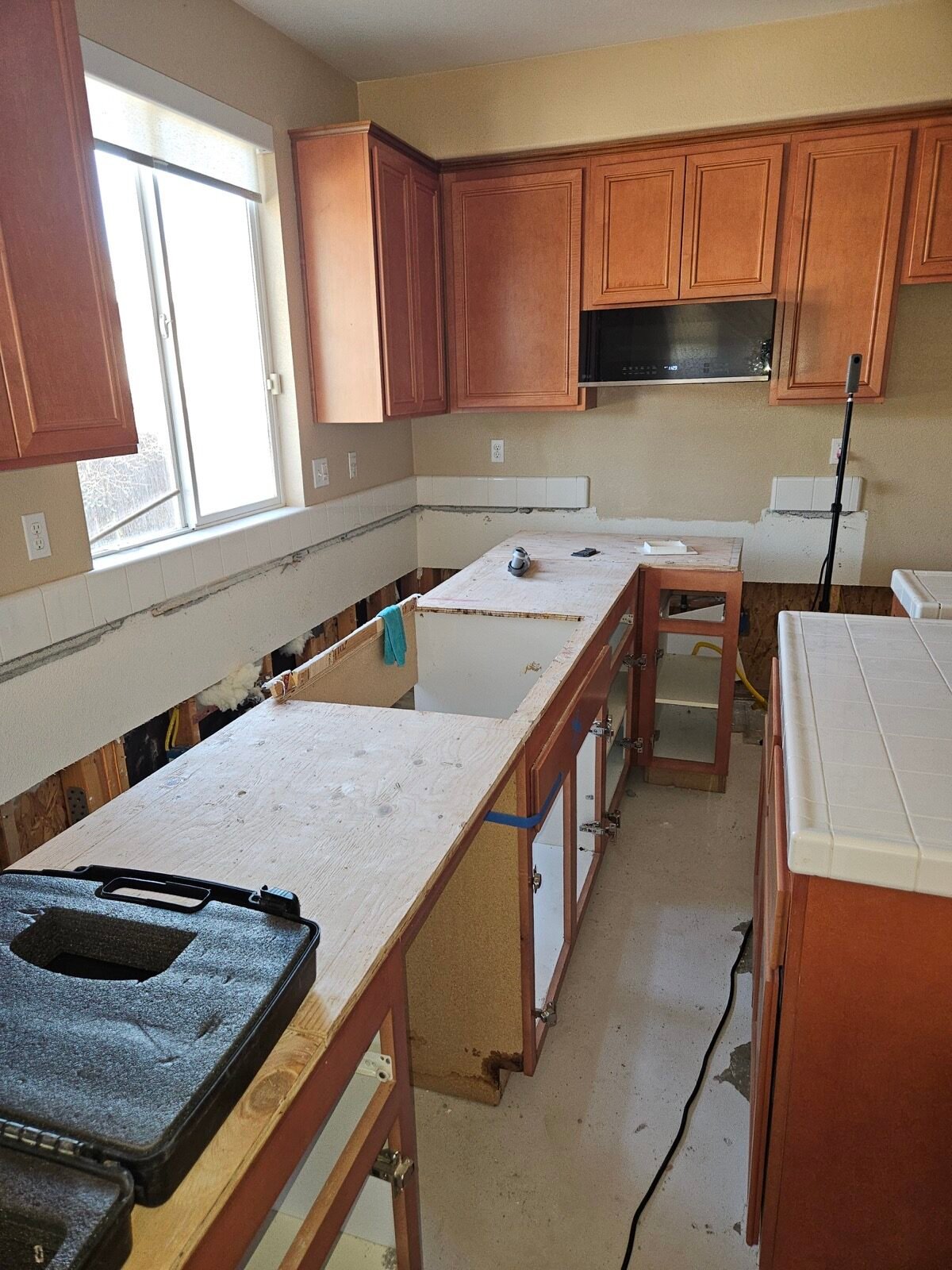
Water behind kitchen cabinets creates two questions: how to reach the affected area, and which parts of the kitchen can stay. CFPR projects in Merced, Santa Nella, and Stockton show that the answer can differ from one property to another. For Merced County homeowners, those examples are useful starting points for a scope discussion.
Access behind a cabinet is a separate decision
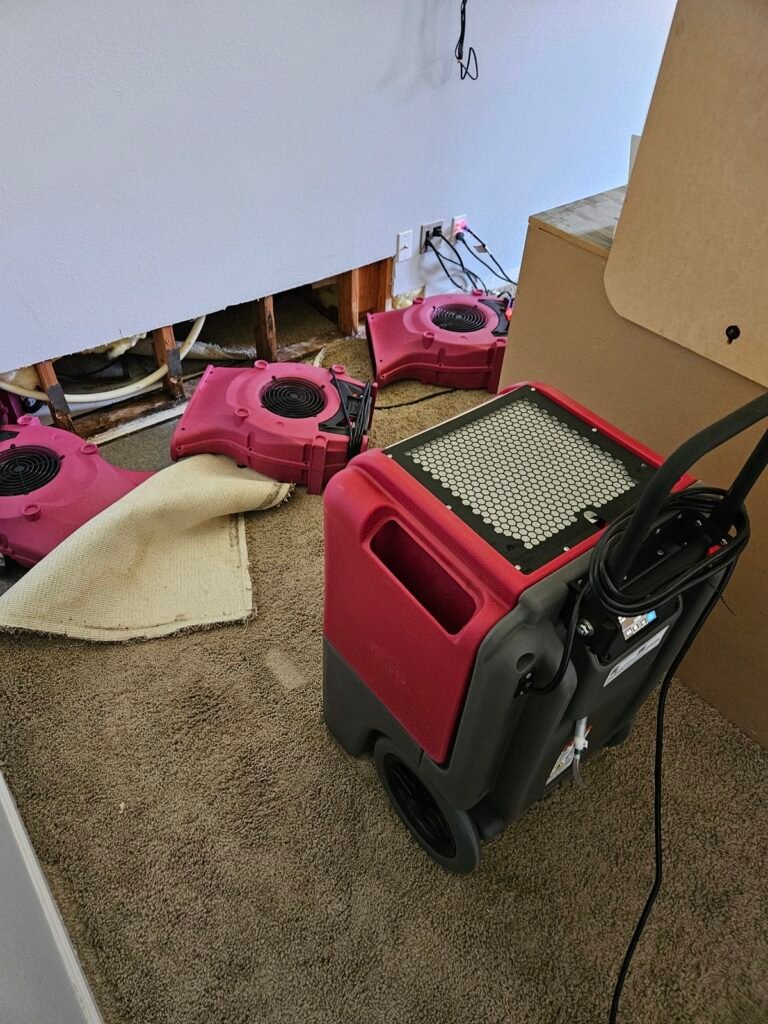
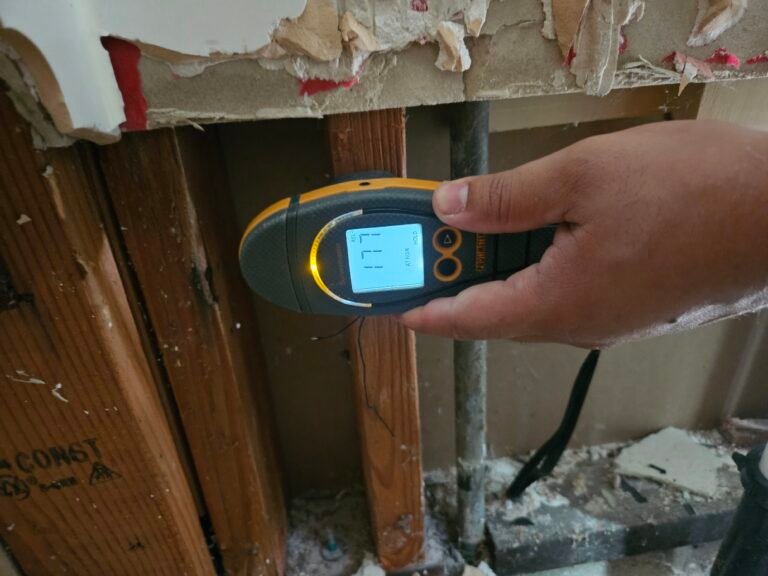
In the Merced kitchen project, the concern was damp drywall behind a lower cabinet. CFPR set up containment and detached the cabinetry to reach the affected wall. The team removed affected materials and dried the studs.
Moving a cabinet to gain access does not, by itself, tell you whether the whole kitchen needs replacement. Ask the contractor to explain which work is about reaching the damage and which work is about the condition of the cabinet itself.
Saving a cabinet is different from saving its face
At the Santa Nella property, CFPR reported that the real-wood cabinets could be saved. In the Stockton kitchen project, affected cabinetry and the countertop were removed while cabinet faces were kept for the rebuild.
Those are different outcomes. When reviewing a proposal, ask whether “saving cabinets” means retaining complete units, keeping selected components, or setting pieces aside for later evaluation. Naming the components helps prevent misunderstandings when the repair phase begins.
Ask for a material-by-material explanation
A useful kitchen discussion covers the cabinet boxes, doors or faces, countertop, adjoining wall, and affected flooring separately. Ask what is known about each item and what will become clearer after access is opened. You do not need to diagnose the materials yourself to ask for that explanation.
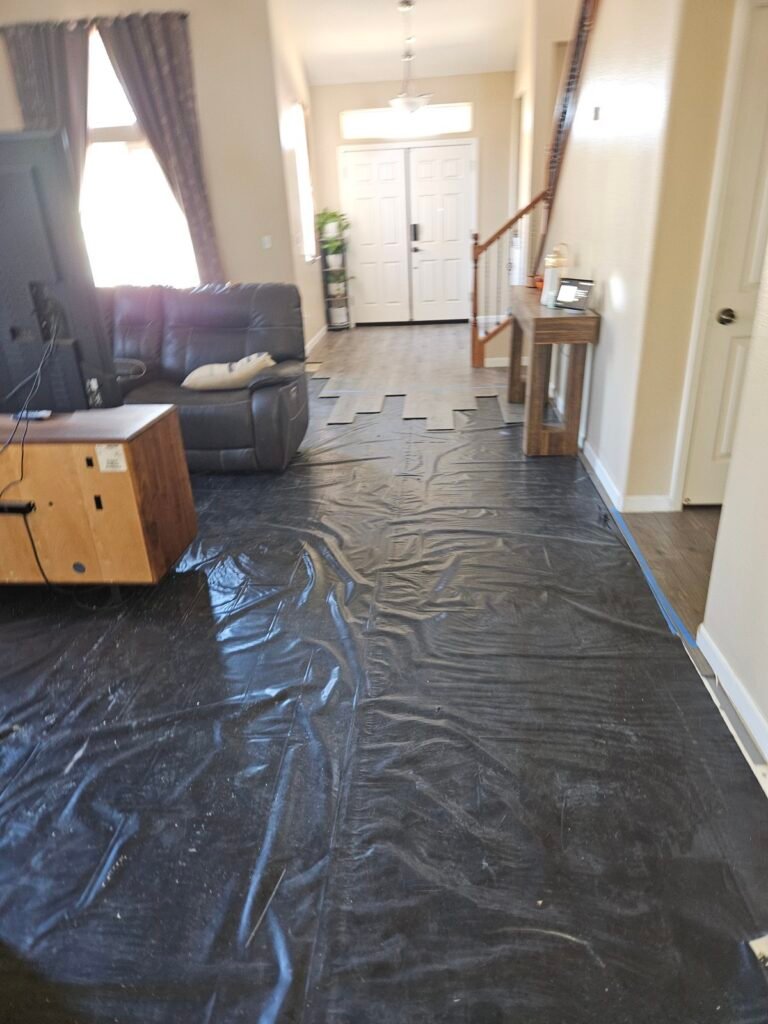
If flooring is also affected, ask how its proposed treatment relates to cabinet removal. The Stockton job included floor-mat drying on hardwood in addition to the cabinet work. One room can require several approaches, so a single broad description may hide important differences.
Plan for the repair phase before choosing finishes
Clarify whether the initial agreement covers cleanup and drying, reconstruction, or both. Ask who will handle reinstalling retained parts and replacing materials that were removed. Keep the scope and any approved changes together so decisions do not depend on memory.
If an insurance claim is involved, ask your insurer about coverage and documentation. A contractor can explain the proposed work, while the insurer determines coverage under the policy. Do not assume that a particular material outcome at another home predicts your own claim or repair scope.
Kitchen water damage help across Merced County
CFPR’s Livingston service area and Dos Palos service area connect local residents to restoration information. You can also browse the Merced County hub for the page closest to your property.
Call (209) 934-2377 to explain where the dampness appears, which cabinet or wall is affected, and whether nearby flooring has changed. An assessment can help turn those observations into a clearer plan.
Photo: Real-wood cabinets retained during CFPR’s Santa Nella water-damage project.
Need help with damage at your property?
Tell us what you’re seeing. CFPR can assess the affected area and explain the next steps.