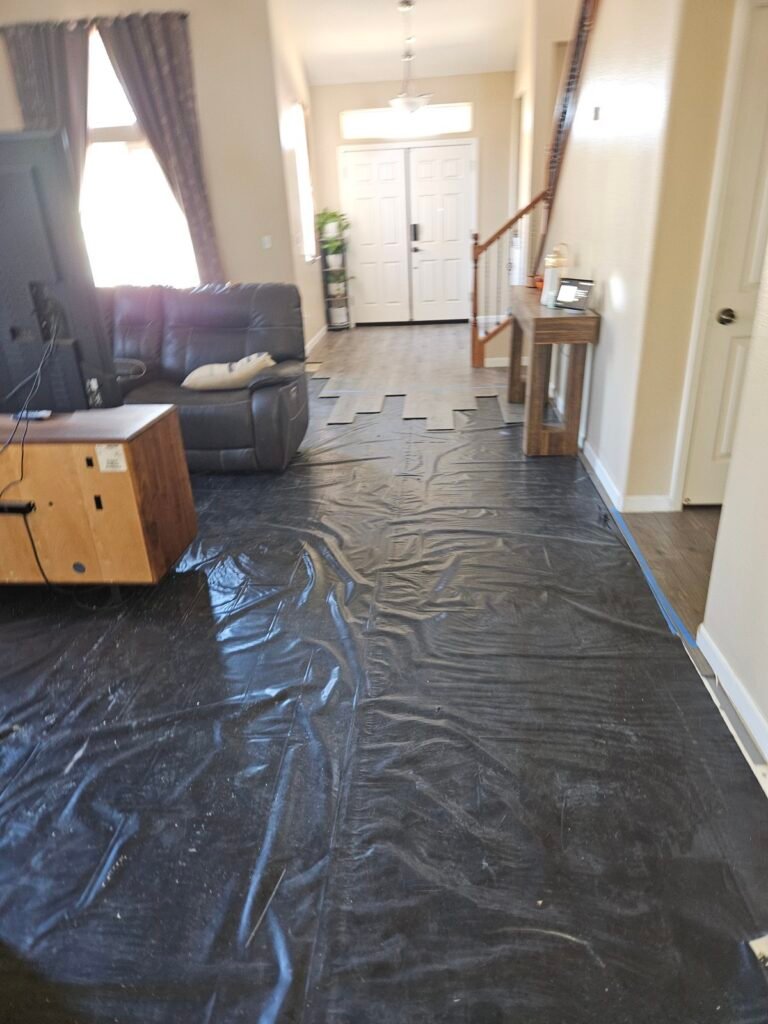
How Long Does Water Damage Drying Take in Merced County?
Understand what affects a drying schedule, why equipment stays after surfaces look dry, and what to confirm before repairs begin.
CF Property Restoration · October 26, 2026
Once the leak stops, it is natural to want the equipment out and the room back to normal. But removing visible water is only one part of drying a building. For a homeowner in Merced, Atwater, or Livingston, a useful schedule explains which materials are affected, how progress will be checked, and what has to happen before repairs. A promise based only on a number of days leaves out the information that matters most.
Why there is no single drying deadline
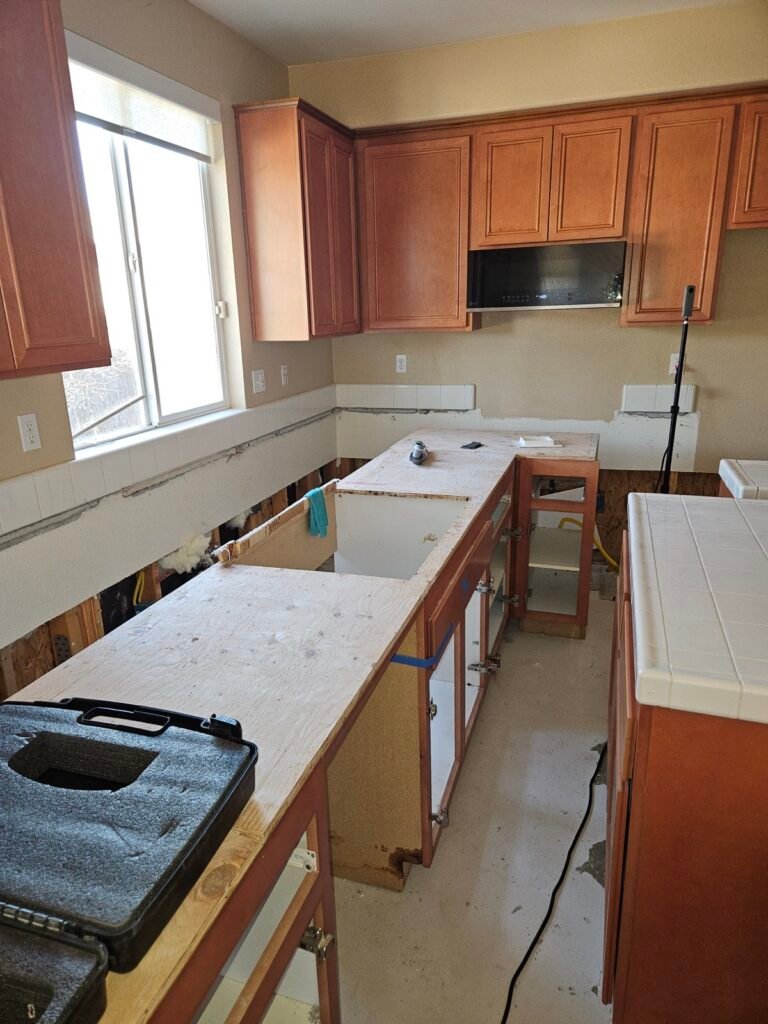
Two rooms with similar-looking damage can require different work. Water may be limited to an exposed surface in one home and trapped beneath flooring or behind cabinets in another. The materials involved, how far the water traveled, and the access needed to reach it all affect the plan. Removing damaged material may also change which areas still need drying.
Ask the team to distinguish an initial estimate from a confirmed completion date. A helpful answer identifies the assumptions: which materials are being retained, which areas are still being evaluated, and when the next assessment will happen. If the scope changes after a wall is opened, the schedule should be explained again.
What CFPR’s Merced carpet project shows
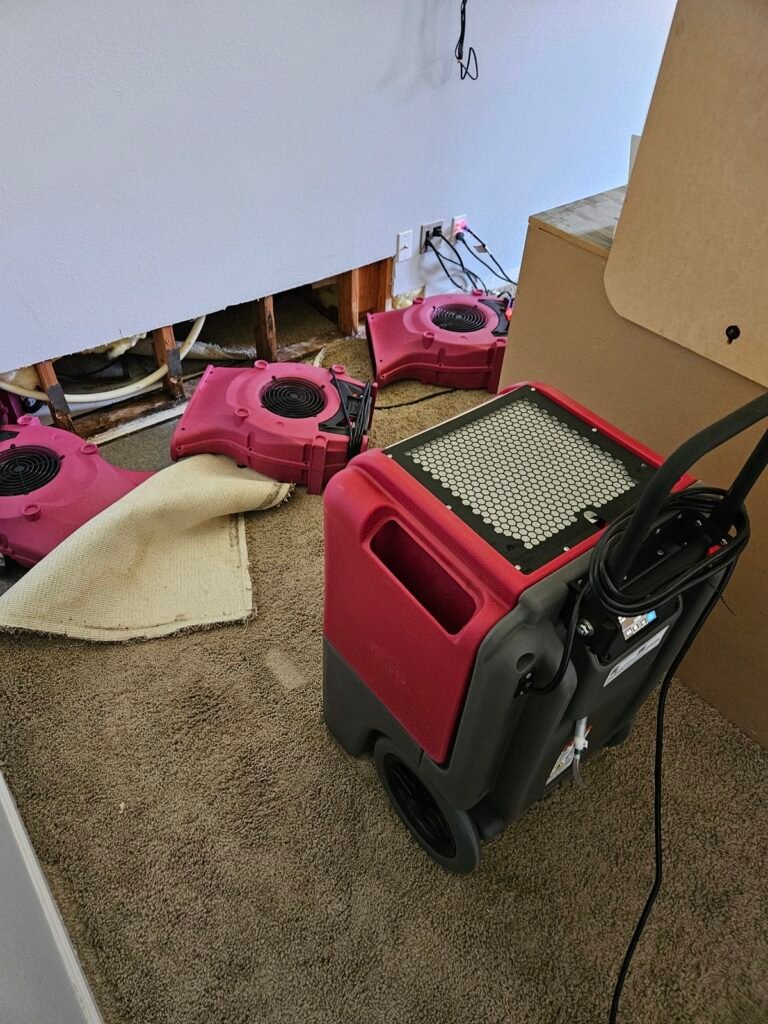
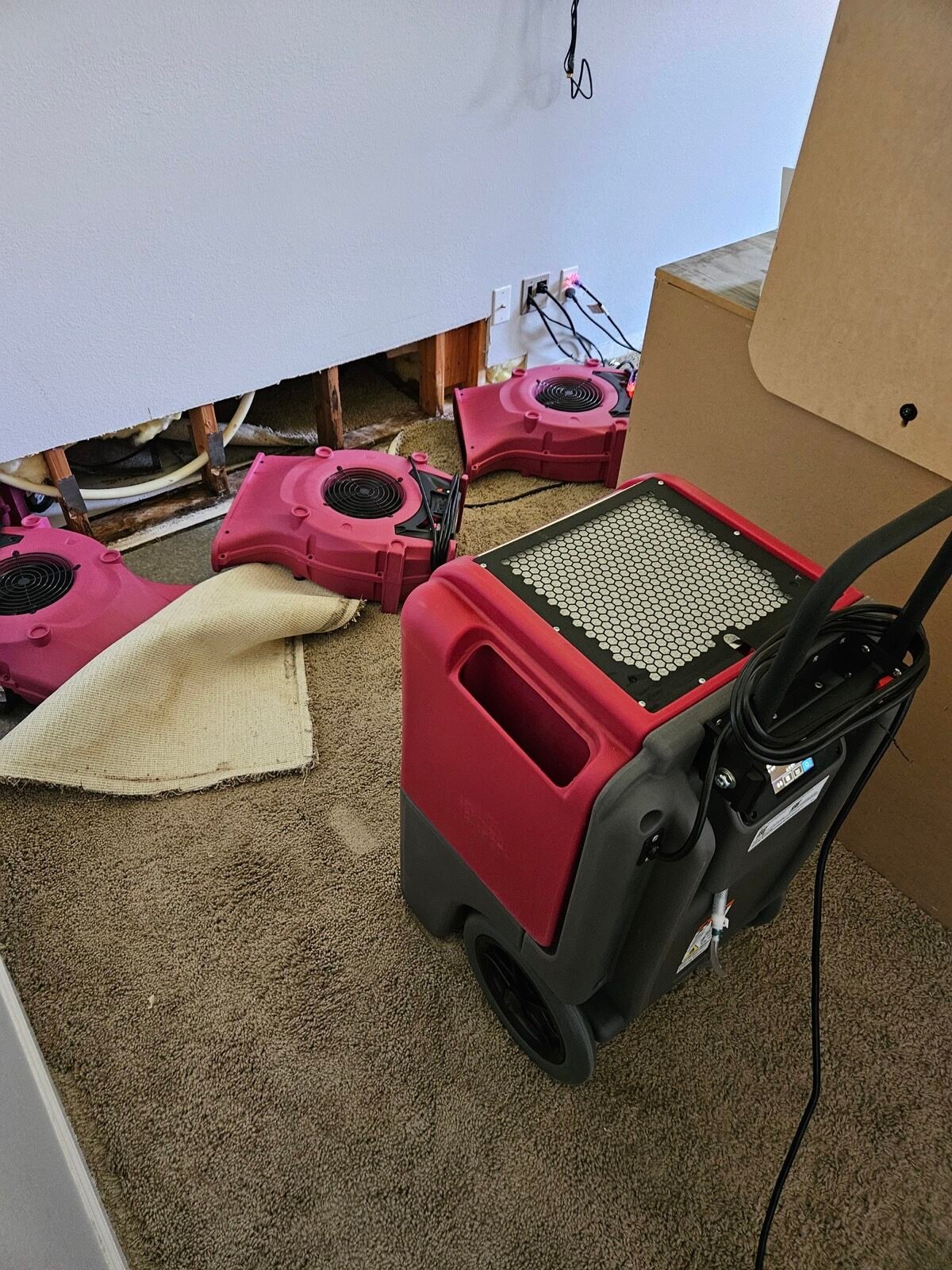
In CFPR’s wet-carpet and wall-drying project in Merced, wet carpet and discolored drywall led to work on both the floor and the lower wall. The team opened the affected area and used drying equipment. The reported project timeline was three days.
That example shows why a wet-floor complaint may involve surrounding materials. It is a record of one job, not a three-day guarantee for another property. Compare the scope as well as the timeline: lifting carpet, opening a wall, drying retained materials, and putting the room back together are different tasks.
What to ask while equipment is running
Before the crew leaves, get clear instructions about equipment operation, access, and whom to call if there is a problem. Ask whether doors and windows should remain in a particular position and which household activities could interfere with the work. Follow the instructions for your project rather than changing equipment settings to make the room more comfortable.
Keep cords and equipment clear of everyday traffic, and tell the team about access needs before moving anything. If equipment stops, leaks, or creates an electrical concern, contact the team promptly; do not attempt a repair yourself. Ask how progress will be documented and when you should expect an update. Those details make a noisy, inconvenient drying period easier to manage.
A dry-looking surface is not the whole assessment
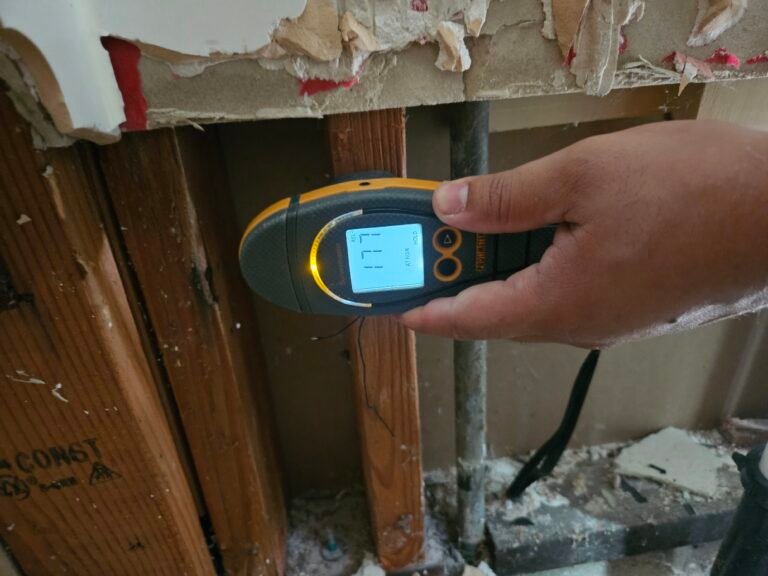
The visible face of a wall or floor does not show every concealed layer. Ask which locations are being checked, what the readings mean for the materials involved, and how the team will decide that drying work is complete. A useful explanation connects the measurements to the actual rooms and materials in your home.
The EPA’s moisture guidance emphasizes prompt drying after water damage to help prevent mold. Its prevention guidance is a reason to act quickly, not a promise that an established water-damage project will be finished within a fixed window.
Before drywall, paint, or flooring goes back
Confirm that the source of the water has been addressed and ask what documentation will be handed to the repair contractor. Clarify who approves the transition from drying to reconstruction and who is responsible for replacing removed materials. Equipment pickup does not automatically mean the entire room is ready for normal use.
Keep the original scope, updates, photographs, and completion notes together. If different companies handle plumbing, mitigation, and repairs, record each contact and the next task assigned to them. This avoids a gap in which one crew assumes another has already completed essential work.
Common drying questions
Can I turn the equipment off at night? Ask your restoration team before doing so. The operating schedule is part of the drying plan; explain noise or access problems so the team can advise you.
Does a longer drying period mean something went wrong? Not necessarily. Ask what has changed and what is still wet. Additional affected materials, limited access, or a revised scope deserve a specific explanation rather than a vague extension.
Does the drying estimate include repairs? Do not assume it does. Request separate descriptions of drying, removal, reconstruction, and any contents handling so you know what each phase covers.
Discuss your property with CFPR
For help with a local property, see Merced water damage restoration or Atwater water damage restoration. CFPR’s Merced County service-area hub also connects homeowners in Livingston, Los Banos, Gustine, and Dos Palos with local service information.
Call (209) 934-2377 with the location, when the leak was discovered, and which rooms appear affected. A clear description is the starting point for a drying plan that fits your property.
Photo: CFPR’s Merced carpet project addressed both the flooring and the lower wall.
Talk with CF Property Restoration
Tell us where the property is and what happened so we can discuss the next step.